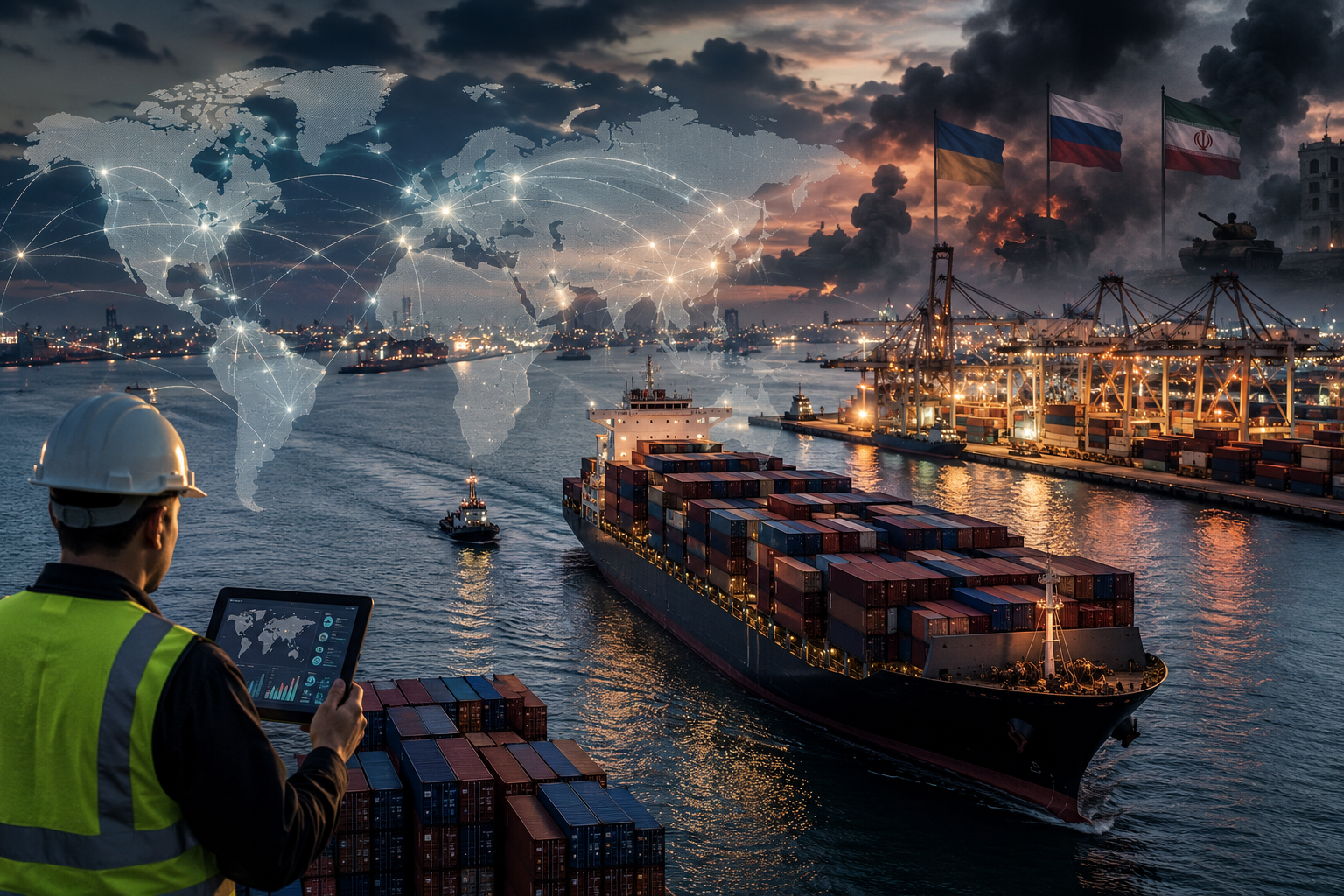
Global trade dynamics have entered a phase of profound reconfiguration. Recent geopolitical conflicts in Eastern Europe and the Middle East, combined with tensions across key maritime routes, have demonstrated that traditional supply chains were not only complex but highly vulnerable. For corporations operating in or exporting to the United States, volatility is no longer an isolated event but an operational constant with a direct impact on cost structures.
When a trade route is blocked or a key supplier is isolated by an international conflict, the domino effect is immediate. Shortages of raw materials or critical components force companies to absorb emergency logistics freights or search for last-minute alternative suppliers, which inflates production costs. Ultimately, this pressure on corporate margins is inevitably transferred to final prices, impacting market stability and increasing the cost of consumer goods.
The Impact of Geopolitical Uncertainty on Operational Costs
International tensions act as a catalyst for inflation across the value chain. Bottlenecks at ports and the necessity of rerouting cargo toward safer, yet considerably longer routes, substantially increase transit times and fuel consumption.
- Rising Logistics Costs: Rerouting maritime and intercontinental paths raises freight rates immediately.
- Internal Inflationary Pressure: Increased prices for essential components or energy sources raise the cost of the entire assembly or production line.
- Consumer Pass-Through: Companies, especially those operating on tight margins, are forced to adjust retail prices, driving demand constraints and market friction.
Corporate Strategies for Supply Chain Resilience
To mitigate these risks without compromising business continuity, organizations are deploying advanced strategic frameworks focused on agility and supply network diversification.
1. Supplier Diversification and Moving Beyond Single-Sourcing
Relying on a single geographical supplier, particularly in politically volatile zones, is currently considered a critical operational risk. Leading enterprises are adopting multi-sector or multi-site sourcing strategies. By splitting purchase volumes among multiple vendors, an operational safety net is created, allowing businesses to absorb localized disruptions in one country or region without halting global production.
2. Transitioning Toward Nearshoring and Friendshoring Models
Physical distance has proven to be a distinct risk factor in times of international crisis. In response, there is a sustained shift toward nearshoring (moving production closer to the target market) and friendshoring (sourcing from nations that share stable political and economic alliances). For the U.S. market, this translates into expanded domestic manufacturing capacity and tighter alliances with stable regional partners.
3. Extended Visibility and Tier-2 Sourcing Audits
One of the largest corporate blindspots lies in the lack of data regarding the supply chains of direct suppliers. A business might consider its Tier-1 vendor secure due to its location in a conflict-free zone. However, if that vendor relies on a Tier-2 facility located in a geographically vulnerable area, the underlying risk remains high. Implementing comprehensive audits and mapping the entire value chain digitally are essential to anticipate hidden disruptions.
Insights on International Operations Management
Operational Perspective Analysis: In the current corporate ecosystem, the most complex invisible barrier when attempting to diversify suppliers internationally is not merely finding an alternative, but standardizing quality compliance and managing customs bureaucracy during crises. Transitioning from one vendor to another typically requires months of technical testing and contract negotiations—time that enterprises rarely have when a military or trade conflict suddenly erupts.
Frequently Asked Questions (FAQ)
What is the difference between efficiency and resilience in a supply chain?
Traditional efficiency focuses on minimizing operational costs and maintaining lean inventories (Just-in-Time). Conversely, resilience prioritizes a supply chain’s capacity to absorb shocks, adapt to disruptions, and recover quickly through safety stocks and diversified supplier networks.
How does Tier-2 supplier visibility affect price stability?
When a company understands the exact origin of its direct suppliers’ components, it can anticipate shortages and negotiate long-term contracts or activate alternative routes before material scarcity causes sharp market price increases.
What role do government policies play in mitigating these disruptions?
Governments can intervene by providing tax incentives for domestic manufacturing, investing in logistics infrastructure, and forging strategic international agreements to secure a steady flow of critical materials.